
- HOME
-
About
About
Runfeng Industrial was founded in 1995 and is a scientific, industrial, and trade entity enterprise mainly engaged in silicate materials, providing customers with high-quality solutions.
Explore more >>
- Products
-
Media
Media
A comprehensive platform for experts in silicate products to release updates, gather industry information, and participate in exhibition activities.
Explore more >>
- Application cases
-
Service
Service
Quality assurance and technical support are equally important, providing full support for customer needs throughout the process.
Explore more >>
- Faq
- Contact

- Soil solidifier
- Sodium based concrete sealing and curing agent
- Lithium based concrete sealing and curing agent
- Potassium based concrete sealing and curing agent
Curing agent series
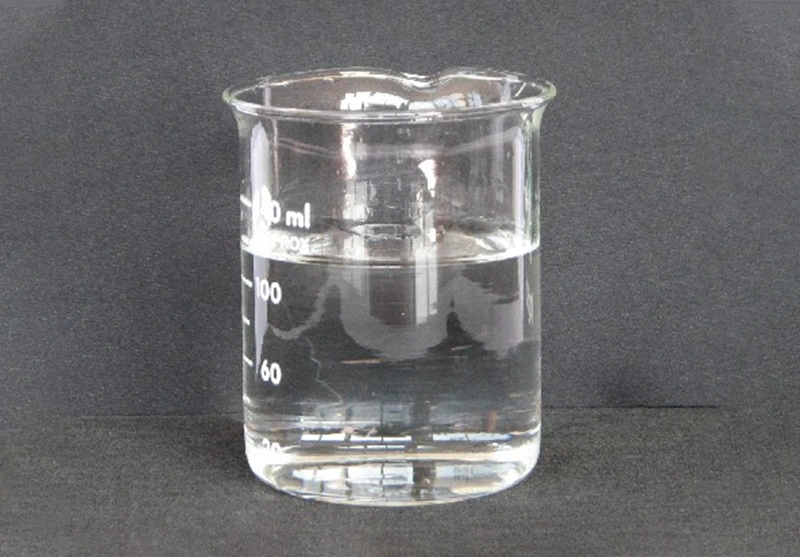
Potassium water glass for anti-corrosion purposes
Our company produces potassium water glass for anti-corrosion purposes, which is suitable for acid resistant and anti-corrosion construction in differ...
PRODUCT FEATURES
CASE SHARE
Our company produces potassium water glass for anti-corrosion purposes, which is suitable for acid resistant and anti-corrosion construction in different environments. It can be formulated into potassium water glass cement, potassium water glass mortar, and potassium water glass concrete according to different purposes.
The acid resistant material prepared with potassium water glass has the advantages of strong impermeability, high viscosity, strong water resistance, and strong impact resistance, and is an upgraded product of sodium water glass. Its prominent advantage is its high operating temperature. In anti-corrosion construction, it can withstand acids of different concentrations (such as sulfuric acid, nitric acid, chromic acid, hypochlorous acid, chlorosulfonic acid, formic acid, oxalic acid and other acidic media) and electroplating solutions or electrolytes.
Scope of use
So far, the widely used inorganic chemical binder in casting production is water glass. Potassium water glass material can be used as a corrosion-resistant surface layer for building floors, wall skirts, trenches, etc. It can also be used as a corrosion-resistant layer for reaction vessels, storage tanks, towers, pools, tanks, brick kilns, flues, chimneys, and is suitable for use in acidic media (except for fluorinated acids) and salt media that undergo acidic reactions. However, it cannot be used in alkaline media and salt media that undergo alkaline reactions.
The liquid phase use temperature of potassium water glass material can reach 350 ℃. Under the action of gas-phase corrosive medium, when potassium water glass cement is used to pave high-temperature resistant block lining, its use temperature can reach 1000 ℃. The thickness of the overall mortar surface layer should be 10-20mm, and the thickness of the overall concrete surface layer should be 40-60mm. The extension joint between potassium water glass mortar and the overall concrete surface layer should not exceed 9 meters, and the joint width can be 12-16 millimeters. The joint should be filled with corrosion-resistant elastic material and compacted.
Potassium water glass materials are suitable for laying acid resistant bricks, slabs, and other acid resistant stones. It is an ideal auxiliary material for making pools, tanks, storage tanks, brick kilns, reaction vessels, and acid resistant flooring.
Potassium Water Glass Anti-Corrosion Material Mix Ratio (by Weight)
| Material Name | Volume | Potassium Water Glass | Potassium Water Glass Powder | Fine Aggregate | Coarse Aggregate |
| Potassium Water Glass Mortar | 1.9-2.1 | 100 | 220-240 | - | - |
| Potassium Water Glass Cement Mortar | 2.1-2.3 | 100 | 200-220 | 250-260 | - |
| Potassium Water Glass Concrete | 2.3-2.5 | 100 | 180-200 | 240-250 | 320-330 |
Corrosion Resistance of Potassium Water Glass Materials
| Medium | Corrosion Resistance | Medium | Corrosion Resistance |
| Sulfuric Acid | Resistant | Hypochlorous Acid | Resistant |
| Hydrochloric Acid | Resistant | Hydrofluoric Acid | Not Resistant |
| Nitric Acid | Resistant | Sodium Hydroxide | Not Resistant |
| Chromic Acid | Resistant | Sodium Carbonate | Not Resistant |
| Phosphoric Acid | Resistant | Sodium Chloride | Resistant |
| Acetic Acid | Resistant | Sodium Nitrate | Resistant |
| Oxalic Acid | Resistant | Sodium Sulfate | Resistant |
| Chlorosulfonic Acid | Resistant | Chlorinated Water | Resistant |
| Formic Acid | Resistant | Hydrogen Peroxide | Resistant |
Potassium silicate glass anti-corrosion material, suitable for laying acid resistant bricks, slabs, and other acid resistant stones. It is an ideal auxiliary material for making pools, tanks, storage tanks, brick kilns, reaction vessels, and acid resistant flooring.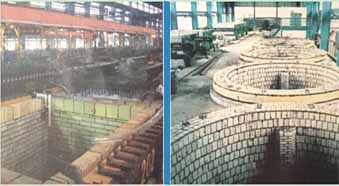
Contact us quickly
If you need some help, please ask questions or even provide feedback. Please choose one of the contact methods below and let us know how to provide assistance.
SINCE1995
Focused on producing various types of silicate products
- About
- Company profile
- Organization
- Development history
- Factory display
- Enterprise qualification
- Quality control
- Products
- Welding rod auxiliary materials
- Curing agent series
- Anticorrosive materials
- Potassium carbonate
- Potassium Bicarbonate
- Sodium silicate
- lithium silicate
- Potassium silicate for fertilizers/printing and dyeing/coatings
- RF powder instant sodium silicate
- RF powder instant potassium silicate
- Sealing and curing agent for flooring
- Methyl series
- Special water glass for construction projects
- Mineral processing special water glass
- Service
- Service commitment
- Technical support